We specialise in technologies that deliver effective and smarter ways of doing business. We focus on using social platforms and tools to improve marketing and internal communications.
www.tribalcafe.co.uk
For many organisations we talk to the question of how to use social technologies to benefit their business beyond the use of marketing has finally arrived at the board room table. Many have made taken their first steps in using social tools and started to listen, learn and integrate their marketing. The broader issues of where and who is responsible for the social business plan brings into focus the many different areas of the business impacted by the use of social business tools.
Different people will have different views on where to start. Some may argue that the focus needs to be on an integrating strategy while others may work on a priority basis and use pilot projects to prove the business case. There is of course the complexity of knitting social into the often siloed activities of an organisational structure. So where and how can organisations start to tackle some of these problems?
Looking at the Business of Being Social
There is both the opportunity to internally and externally harness the social capabilities to help organizations solve business problems. But it is context of how culture and technology need to be integrated that we understand the implications on strategy and how important it is to embrace change management.
Initially organisations need to understand their own capabilities and audit there current position:
understand who in their business is currently using social media in relation to the business e.g. active in Linkedin forums...
understand employee activities on social media - this is often useful and helpful to determine who could be recruited to help on projects
benchmark you brands/products and services on social networks
benchmark your competitors
In much the same way as you would put together your information sets to build a business plan and strategy you need to understand your current position for developing a social business capability.
Set clear goals and measures e.g.
% increase in coverage of PR per £XX spend
Sales could be a % Increase in Sales Leads
Customer Service could be % reduction in response times or % reduction in number of customer service queries
Moving Quickly
We often see that many organisations end up with analysis paralysis. As we talked about in our last blog prioritizing how you intend to use social business is critical.
In today's fast paced world it is about being agile:
Flexible and responsive resources (internal and through partner network)
Rapidly assimilating changes in your business environment
Focusing on information that can quickly be acted upon
Harnessing influencers for change (internal and external)
The changes in technology and business are not incremental they are a major shift to a new form of technology and operations orientation. It is how the organisation responds to a new internal employee engagement model and also respond to a social customer across multiple channels. As consumer adoption of new technologies and behaviours change, the challenge is for organisations to reconfigure resources and capabilities to meet those changes.
Key Take Outs
Benchmark your business and capabilities
Research and benchmark your competitors
Understand your customers/listen to where they are/what is being said/channels
Research your network and find out who are influencers and potential social champions
Aim to develop a centre of excellence for social business that is cross divisional/departmental
Recognize that mistakes are going to be made - that is why we call it learning
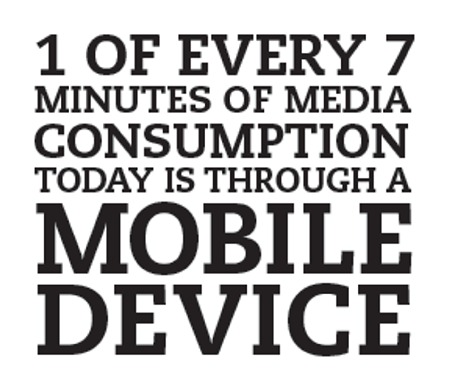
Ask a young person with a smartphone to order a pizza or takeaway. The chances are they won't turn on their PC; they might look for a ragged favourite menu stapled to their kitchen wall or they may simply and intuitively pull out their smartphone and search. In a similar vein whilst looking to buy a printer in a large store, I saw people pulling out their smartphones and checking prices online and yes I did it to; the store in question said they would match any price (why not then).
The mobile (smartphone) is transforming how we interact offline whether that is searching for services, brands or prices - we do it when we want, wherever we are. It is our access point to our social networks; our key communication tool.
If we add into this mix check-ins e.g. Facebook, ShopKickwe can see how our online moments intersect with offline. Social commerce is not just a Facebook store or Facebook Open Graph integrated into a website; it is the influences upon our buying decisions.
Pre-sales: e.g. search, reviews, comments, likes
At the point of sale: e.g. offers, coupons, group buying
Post sale: e.g. sharing, commenting, rating
People are no longer shackled by access to the internet via a PC, it can be in the moment - it is real time interactions that will become increasingly important providing more relevance than before.
What will change this significantly is the integration and convenience of being able to pay using the mobile phone:
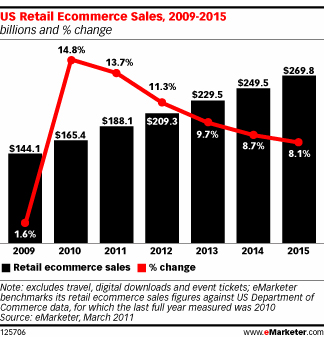
Here are some of the figures that demonstrate the continued growth of online:
The research firm Forrester projects online retail sales to increase to almost $250 billion by 2014. That’s a big number, but still a small piece of the retail pie at just 8% of U.S. sales.
Here are some interesting inforgraphics that support the changing dynamic of the social customer:
Infographic illustrating the trend in online retail sales
An infographic on the development of Social Commerce in 2010
I’m fascinated by the impact of emerging technologies and how they influence economic variables across the media, marketing, information and entertainment ecosystem. In particular it is how the online and offline experience will integrate as brands seek to differentiate themselves.
If we take a look at retail we can see that at the moment it has several persistent problems: the high cost of attracting visitors, the low probability that they become buyers and the difficulty of getting them to come back. Sociable e-commerce offers potential solutions to all of them. So both brands and retailers must integrate their touch points to access customers.
Social business tools create experiences
It is no longer about channels; it is about the customer life cycle across everywhere a brand touches them. This involves orchestrating the customer relationship across touch points, not channels. It is mobile though that will bridge the gap between online and offline experiences, challenging marketers to connect the dots through creative solutions that match consumers’ mobile consumption habits. As brands give birth to creative ways to engage people their responses and conversations will also change how engage, brands will behave more like people and consumers will more than ever assess brands as they would people.
Is it Just about Facebook?
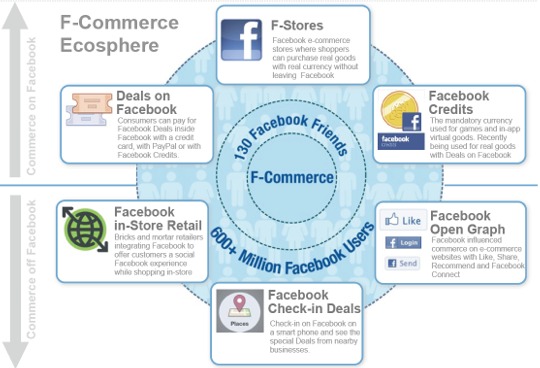
Facebook has extended its reach beyond the platform so that websites can integrate Facebooks Open Graph e.g. the 'Like' and 'Send' buttons. Facebook’s business functionality will continue to evolve. Eventually, social elements will cross each function of business. Those businesses that are early to explore these methods will dominate what could become the largest market place: Facebook.
This illustration from Horizon Studios demonstrates the dimensions of Facebook commerce
Social Commerce
As e-commerce retailers continue to pop-up and online shopping becomes even more prominent, people will increasingly become more and more comfortable sharing transactional items like clothing, daily deals, books, and electronics as more of their purchasing decisions are made online. For the new generation of e-commerce firms, the offline world is as important as the online one.
New social platforms like Swipely will gain popularity.
Data the Oil of Commerce
Facebook captures vast amounts consumer data and this rich seam of data links personal data, network associations, transactions and location. It will drive yet further ways for brands to understand their customers. The very nature of the feedback mechanisms built into being a social brand provide the ability to fine tune product development, accelerate innovation and harness new technologies to drive engagement.
The potential to harness this data to deliver targeted, personalized shopping experiences for brands, is huge.
What are the building blocks
Businesses need to start small and simple-piloting, experimenting and reworking until successfully determining how to transform themselves into being social and agile businesses. Businesses that embrace this change to social commerce will reap the benefits of differentiation, reduced customer acquisition costs, lower service costs and faster time to market.
1. Integration
Get your channels in place. Set up Facebook and Twitter profiles – these are the main players.
Develop a mobile website, this is increasingly important and most websites do not render or work effectively on a mobile.
Use your mobile website to offer promotions, QR codes…many mobile website solutions like ours allow you to control this through a Content Management System that is easy to use.
‘Socialise’ your website: add social media sharing links to your website.
Make it easy for people to share integrate social sharing with social sign-on so that items can be shared with the least amount of friction.
2. Facebook Page
Develop your Facebook page and build you fan page. If you haven’t established a Facebook page yet then don’t just rush in and commission a Facebook store you need to initially test and build you presence on Facebook, make sure it works for you.
Commission a branded landing page. Actively promote your products, promotions and discounts using email, Twitter and Facebook.
Understand how social your customers are: listen and engage customers to see how they react. Social is not for everyone.
3. Extend your capabilities
Enable sharing with friends before buying – to allow customers to crowd/friend-source advice on whether to buy.
Use a Social Shopping Cart which allows people to shop and share with their friends via Facebooks social graph.
Integrate Facebook comments into products; customer feedback is the essence of improving your range and products
Don’t just sell: social commerce shouldn’t be all about selling – add value to their customers’ shopping experience – and give them a reason for communicating with you and their peers.
Create a dialogue with customers who want to talk to you. Use your blog and social channels to do this.
Use your Facebook wall like it’s your shop window but don’t only broad cast – use it for feedback. Openly encourage customers to have a say in the business – by crowdsourcing decisions it will encourage how they promote you (word of mouth initiatives)
Integrate your customer service strategy with your social media strategy – diffuse situations by helping customers directly through social media.
4. A Facebook Store
Investigate bespoke solutions turn your Facebook account into a fully functional e-commerce platform.
Use Facebook contests that request “Likes” to automatically send users to the Facebook store to encourage product browsing.
Integrate your marketing and inform your current customers where to find your store and how it works.
Use the Facebook Fans API to combine promotions with links to product detail and purchase pages within the Facebook store - this enables brands to collect profile data. Add product videos – and host them on YouTube.
5. Promotions
Have a clear strategy and timetable promotions, make it varied and keep It interesting.
Don’t simply discount. Use virtual rewards as well as monetary ones - reward your fans with exclusive discounts and promotions.
Form alliances or partnerships with local businesses where you have synergies to promote each other.
6. Measure
It is important to use a number of different tactics to drive traffic to your website, develop referrals from social media and use offline tactics.
Measure and track how effective each is and use the information to refine and improve your marketing.
Use Facebook analytics to understand who is buying, who is being converted – use it to refine your marketing approach.
What do you think will be the deciding factors for being successful with online?
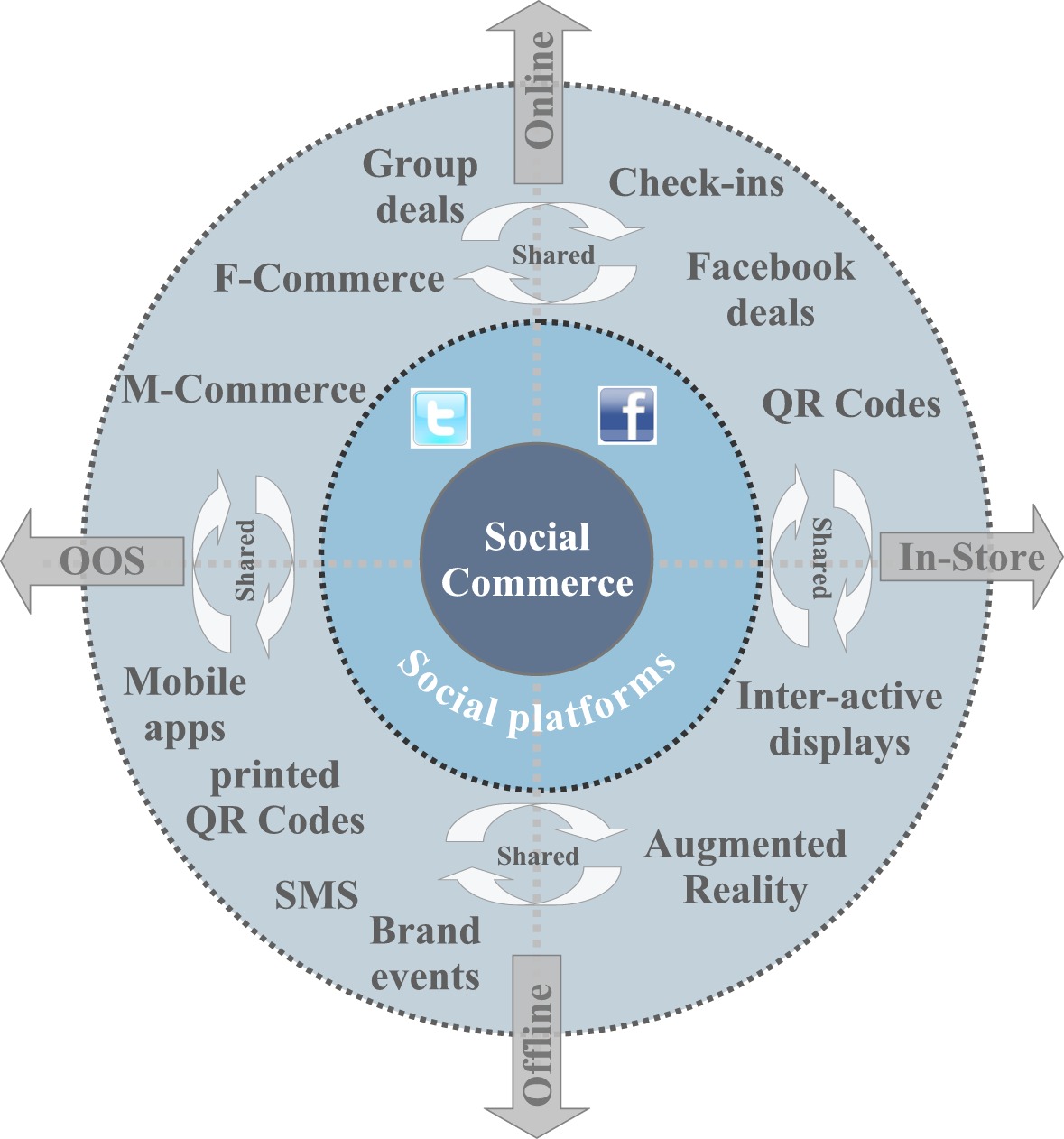
Integrating touch points
We produced a rough illustration of how some touch points and technologies integrate; it is not a model so much of an example of how each can play a part in how a business can use mobile, social and emerging technologies.
The Offline Experience
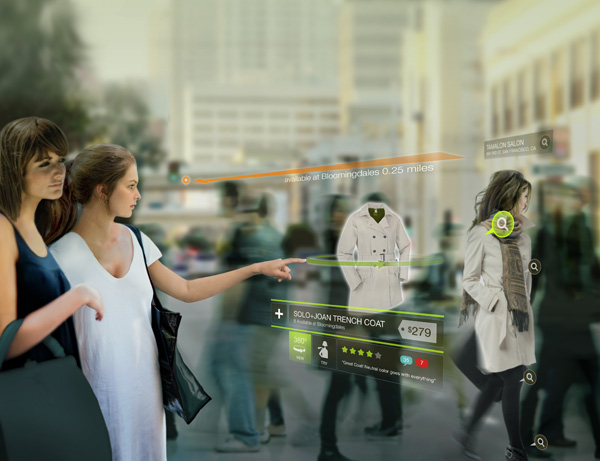
We can see how offline (this may involve connected devices but not your own 'device') experiences propagate online:
Paul Greenberg who blogs on CRM at ZDNet and is author of CRM at the Speed of Light (great read) has been instrumental in sharing knowledge on the rapidly changing and evolving world of CRM. CRM is a business strategy designed to optimise profitability, revenue and customer satisfaction. As social channels have developed so too has the complexity of dealing with the associated volumes of conversations around brands and products. Consumers now have power to voice their opinions openly.
Organisations are now rapidly trying to integrate information into their CRM systems (many of which are old legacy systems such as SAP/Siebel). Kate Leggett provides some practical views on this and the need for organisations to take control. So what is the main debate about?
Many people are frustrated with the many current practices of CRM that fail to deliver a good customer experience. Many can relate to long waits on phone lines, multiple interactive voice response lines, lack of consistency with information...and the list goes on. Despite masses of investment in Siebel/SAP and Business Process Mapping organisations seem to have removed not complimented the customer experience. The drive to reduce costs not enhance the customer experience was the main driver behind many CRM initiatives and outsourcing programmes.
The main problem is that CRM platforms measure customer interactions solely upon product purchase history and preferences. These measures are product centric and historical and don't consider or take into account experience or forward looking trends & preferences.
One of the classic cases of bad customer service and the use of social media was the management by United Airlines of Dave Carroll's guitar which was badly handled both in terms of customer service and PR. The power of the social customer to influence and amplify their voice is here. But let's not forget that companies should tread a careful line between service and rewarding those that shout loudest. While traditional is still available, many organizations are often responding to customers faster when the complaint comes in via a social media site.
As a result, are we teaching customers to use social media as their customer service escalation path? Are we instilling bad behaviours of immediacy? Whether we like it or not real time is approaching just as a generation have changed to the timeliness and expectation associated with different communication methods: from letters to faxes to emails (initially by PC and then the move to mobile) and now Twitter. We are moving to closer to real-time.
Paul Greenberg defines social CRM (SCRM) as: "the company's programmatic response to the customer's control of the conversation." Its about the company taking hold of the reins of the conversation, not the other way round.
Brian Solis: SCRM affects the whole organization and is transformational. According to Solis, 'the ability to identify active communities of relevance', tracing influential people and channels, and the dissection of all phases of the process of decision making, all in real-time, are crucial aspects of social media marketing.
Involving these ‘influencers’ and communities, and the linking of CRM to interactive marketing actions are some of the core elements of an integrated, social CRM. As Brian intimates we are moving to an experience economy.
So What is Customer Experience Management (CEM) ?
Customer experience is one of the great challenges for innovation. It is interactions between an organization and a Customer. Of course this involves the customer relationship management, however this is only one element of the service delivery. It is the blend of an organization’s performance, the thoughts and feelings that customers have. As the customer moves from through the touch-points of its association with the organisation - it is the experience.
But where is this heading?
The struggle that organisations face is not purely at the operational level of integrating systems, processes and adopting these tools. The fundamental shift is on how organisations transform their structures, cultures and values to reflect a more customer focused approach to evolve to this new focus on customer experience. This is also a necessity to adapt and be agile in rapidly changing environment. Organisations will need to focus on the perspective of their customers and empower their employees to deliver it well; they need to become a social business. Happy customers become advocates and bring along their friends.
What of the future?
Brands and organisations are having to face a point where the consumer and organisation are converging in the relative role of 'real time' experiences. Supplying goods and services will be associated with facilitating unique consumer experiences on demand and these may be off-line and on-line or augmented These experiences may be facilitated by a brand community or a new experience environment to interact with and co-create value. Since experiences are not easily replicated or copied these will be the value and uniqueness where brands will battle for consumer attention.