Showing posts with label Agile. Show all posts

Sunday, 19 June 2011

Social Business - Where do we start?

Where to start


For many organisations we talk to the question of how to use social technologies to benefit their business beyond the use of marketing has finally arrived at the board room table. Many have made taken their first steps in using social tools and started to listen, learn and integrate their marketing. The broader issues of where and who is responsible for the social business plan brings into focus the many different areas of the business impacted by the use of social business tools.

Different people will have different views on where to start. Some may argue that the focus needs to be on an integrating strategy while others may work on a priority basis and use pilot projects to prove the business case. There is of course the complexity of knitting social into the often siloed activities of an organisational structure. So where and how can organisations start to tackle some of these problems?

Looking at the Business of Being Social


There is both the opportunity to internally and externally harness the social capabilities to help organizations solve business problems. But it is context of how culture and technology need to be integrated that we understand the implications on strategy and how important it is to embrace change management.

Initially organisations need to understand their own capabilities and audit there current position:

  • understand who in their business is currently using social media in relation to the business e.g. active in Linkedin forums...

  • understand employee activities on social media - this is often useful and helpful to determine who could be recruited to help on projects

  • benchmark you brands/products and services on social networks

  • benchmark your competitors


In much the same way as you would put together your information sets to build a business plan and strategy you need to understand your current position for developing a social business capability.

Set clear goals and measures e.g.

  • % increase in coverage of PR per £XX spend

  • Sales could be a % Increase in Sales Leads

  • Customer Service could be % reduction in response times or % reduction in number of customer service queries


Moving Quickly


We often see that many organisations end up with analysis paralysis. As we talked about in our last blog prioritizing how you intend to use social business is critical.

In today's fast paced world it is about being agile:

  • Flexible and responsive resources (internal and through partner network)

  • Rapidly assimilating changes in your business environment

  • Focusing on information that can quickly be acted upon

  • Harnessing influencers for change (internal and external)


The changes in technology and business are not incremental they are a major shift to a new form of technology and operations orientation. It is how the organisation responds to a new internal employee engagement model and also respond to a social customer across multiple channels. As consumer adoption of new technologies and behaviours change, the challenge is for organisations to reconfigure resources and capabilities to meet those changes.


Key Take Outs


  • Benchmark your business and capabilities

  • Research and benchmark your competitors

  • Understand your customers/listen to where they are/what is being said/channels

  • Research your network and find out who are influencers and potential social champions

  • Aim to develop a centre of excellence for social business that is cross divisional/departmental

  • Recognize that mistakes are going to be made - that is why we call it learning

  • Remember to be adaptive/respond top changes

  • Build pilots that can be scaled quickly

Saturday, 18 June 2011

Social Business = technology, culture and behaviours

What is a social business?


There are probably many different definitions and variations on what a social business is. I don't want to get bogged down in semantics. What I am passionate about is the way people can can come together to share, learn, collaborate and benefit from embracing the principles of social business. It is the transformative impact it can have both culturally as well as operationally.

When I listen to people and views on the net there are people that talk about changing behaviors - focusing on how people's habits have changed, how they interact, where and how they spend their time, that people are sharing information socially, how they buy, who they trust, how they find information, how they interact...Others seem to focus on how the technology is changing people's behaviors enabling new ways to interact, collaborate, communicate, share, connect...and a few even mention culture.

We need to recognize that Social business is about people, technology and culture and one without the other doesn't work. Organisations that just embrace the technology of an enterprise 2.0 vendor selling them a community platform will not work. Neither will someone developing a strategy for cultural change without the guidance on how to implement and manage the change process. Equally overlaying a social business strategy on a culture of fear and hierarchical management control will fail.

Some articles that reinforce these are:

Learning to Change


The idea of having to adapt and change is as old as business itself but the need to change rapidly is now a necessity and a source of competitive advantage. Customers are changing and new business models are emerging thanks to flexible and social and scalable technology solutions.


Organisations are now tackling how to integrate social technologies into their business beyond the use of marketing or customer service. However transitioning to new working practices is not easy for many as they move from old legacy systems to new (often requiring intermediary stages),  aligning goals and objectives, aligning roles and responsibilities, changing processes as well as leading the change.


We can look at how Dell and other organisations have focused there efforts on taking small digestible steps, piloting projects, developing champions and building on their learning.

One aspect though is consistent it is the pace and need to change and learn, to adapt to become flexible to the dynamics of a new and emerging era.

Focus on the application


Organisations who want to adopt a social business approach need to focus on the application and relevance to the business. There are a multitude of ways applying social solutions improve a business. However, each business is different and how and what is a priority will depend on the organisations strategy, goals, objectives, market position...What is important is to identify the opportunities prioritise them and start.


I call this the age on your imagination because you are main limitation in coming up with business ideas and solutions is no longer the technology.


Key take outs


  • Research your market and identify how your market, customers, competitors and business models are being affected or could benefit from social business

  • Identify some tangible projects

  • Research your employee capabilities

  • Bring together relevant stakeholders

  • Scope your projects and enable your team to make decisions

  • Communicate, communicate and communicate - be open


Saturday, 21 May 2011

The Transformation to Mobile

It is inspiring to see change happen at the pace and scale that we are currently experiencing. Both businesses and consumers are changing long standing habits and adopting new technologies, tools and behaviours. But it is perhaps the transformational nature of the mobile that warrants the most attention.

If we explore the numbers we start to understand how we are becoming mobile:


The Lagging Business World

The unstoppable and powerful adoption of mobile by consumers is not directly reflected though in how businesses are using mobile. Less than 2% of businesses have a mobile website and it is estimated that only 16% have a mobile strategy in place. Astounding that out of over 250 retailers we surveyed in the UK less than 2% had a mobile friendly website. A further sudy in the leisure sector which covered over 150 businesses found that less than 5% had a mobile site.

Who Should be Looking At Mobile

Let's imagine that you are between the ages of 18 - 25 and interested in getting a take away. Chances are you will not fire up your laptop or PC but just simply use your Smartphone. However, if you get a mobile website where you can't easily see the menu you will click away and go  to a competitors. Clearly the benefit of local and mobile searches is obvious and for takeaways and restaurants alike.

In the UK we have the forthcoming Olympics next year and whilst this may seem ages away now is the time for hotels, restaurants and tourist attractions to focus their efforts on mobile. By learning now they will be in a position to fully integrate and optimise their marketing by 2012. Something to ponder though is that many of these places have got their basic online marketing socially integrated yet at a time when people will be buying tickets and planning their trip.

Some retailers though are leading the way:

The Wave of Change to Come

Perhaps it is the inevitable influence of mobile payments that will give the necessary push that will move businesses forward. The reality of mobile payments has been a strategy of the banks and subsequently has had huge investment and support resulting in the first mobile payments service.

Near Field Communication (NFC) will change not only how people make payments but also provide innovative approaches to marketing and to get an insight into this we can look at Japan.

What businesses need to do

Many businesses need to on-board a strategy as to how they are going to harness the mobile and integrate into their marketing strategy. The early adopters and learners will gain advantage over those that lag behind. Technology is becoming easier to deploy and knit together but establishing an understanding of how to design for your customer is the critical factor. Users are looking for seamless and secure touch points and ways to be involved with a business.

Undoubtedly two key focus areas for business need to be making building their capabilities using social media and mobile. At TribalCafe are goal is to help businesses cut through the clutter and capitalise on the technologies that can deliver smart solutions that help them grow.


.

Sunday, 23 January 2011

5 steps to start your social business strategy

Why focus on integrating social business technologies?


The trends have been discussed and explored, the case studies are readly available and the technologies are proven - now is the time to invest and build capabilities for a social business.


McKinsey highlights the case that adoption is critical for organisations to become social businesses. The simplification of integration, lower costs and adaptive systems create a rational for change that is undeniable; social business is the focus for 2011.

Benefits of being a social business:

  • Increasing internal efficiency and knowledge collaboration

  • Improved customer relationships

  • Improved innovation through customer participation


But it is the need to adapt to changing customer behaviours and maintain mind share in congested markets that is driving much of the change. Let's revist some of the trends that are happening that affect how organisations market to customers.


Many organisations are still grabbling with how to use social media to engage their customers, but besides a few leading brands many are failing. But why? Well one of the main reasons is that in changing over to social media many are still broadcasting information and not engaging in developing a relationship. For others it has to date been a tactical dip in the water often isolated from the main organisational strategy.

Organisations now need to recognise the greater impact of a social business strategy to engage customers and unlock value.

5 steps in developing a social business strategy


The American Marketing Association (AMA) article on social business design, highlights the changing nature of work, a shift to cultures of sharing, and evolution of personal technology create emerging market opportunities. It points to a social business strategy.

1. Learn first - Explore

To start with, an organisation and key stakeholders should use an expert to quickly get up to speed with the technologies and how they are being used.  A good consultant can deliver this and at the same time focus on your industry and/or market and what is relevant. Also use and involve people in the business who are interested and knowledgable. This is the explore stage of developing a social business strategy.

2. Framing and developing the questions

Develop the questions that apply to the organisation. These lay the foundations for developing a strategy and will help to prioritise any research needed. Involve key stakeholders in formulating the questions; some people have different perspectives, roles, knowledge and skills. These all add value at this stage. As a team prioritise them and sort them into long term and short term.


Here a few key questions as examples:

  • How are our customers using these social technologies

  • What markets/products and customers should we focus on

  • What internal changes might be needed

  • How do these technologies change our business model


3. Benchmark the business

Many of the questions that around strategy often relate to markets and competitors. We have in an earlier blog covered some of the key tools for social monitoring. However here are some further reports and information that may be useful:

Why benchmark your brand/business? Benchmarking helps you understand your market, competition and provides you with recommendations to differentiate. A good benchmark report will provide strategic options towards developing a competitive advantage. A benchmark report can be used to understand where your customers are, who are key influencers, their interests...It can be the start point for understanding how you are going to measure your business.

4. Identify the opportunity and invest

Choose a project that can deliver some tangible wins. If it is marketing to your customers, then consider that the ultimate goal is to focus on the long term aim is to build a community around the brand and delivering sustainable value. This means tactically building on each promotional campaign to develop the brand community rather than disposing of customer data and assets each time. This then engages customers in each stage of the brand journey.

A critical part at this is to set the goals, objectives and review the measures that you are going to use. We dealt with the ROI measures that can be used in an earlier blog.

5. Content, Quality and Engagement

Content is the reason your customers come to you, the reason they will connect emotionally with your organisation or brand. However, in todays digitally diverse world many organisations under estimate the time, effort and cost of good quality content. The content strategy is vital and should be thought of early. Multi channel communications must have consistency to reinforce each other and produce a unfiying customer engagement.

Managing and producing content is becoming increasingly difficult due to the technical skills required.

Key tips

  • Know Your Voice - Everything you say on the social web should “sound” like your brand

  • Time Your Content - Create a calendar that spells out what you’re going to pproduce and when you’re going to publish

  • Add value - Know your Customer. Why does somebody follow you? Why do they like you? It’s because your brand offers them something; understand this track it keep it fresh.

  • Solve Problems - Humans have survived for so long because they’re great at answering questions. Work collaboratively with your brand community to solve their problems, help with their interests...

  • Be True - Good content isn’t fake. It doesn’t make promises that it can’t keep. It’s human and honest and that is why it makes a human connection with its audience.


As with any business the more time and energy that is spent at the planning stage improves upon the execution. It is about being great, delivering to high standard and implementing well and a good strategy determines much of this.

Be Agile

In today's changing world organisations need to adapt continually. The days of annual long range plans are gone. Scanning the environment, brnging on board intelligence and then adapting plans are vital to success. So set the goal of becoming agile and adapting to stay ahead.
Social media and agile leadership
View more presentations from TribalCafe.


Saturday, 15 January 2011

Social Business and Strategy Thoughts

What is a Social Business Strategy?


A strategy is quite simply it is the long term plan on what to do to achieve a goal.

A good strategy defines a very clear route on what an organisation is looking to achieve and answers the question on how it will do this. A social business strategy then is focused on how an organisation is to integrate social technologies to help it achieve its goals. There are two areas of opportunity for an organisation; to improve performance and productivity internally and to improve customer engagement externally.

To make some decisions then about a social business strategy organisations have to think about how the context of these within their business and the fit to their customers. Before deploying resources (people, money...) some key questions need to be answered...e.g.  how will these technologies affect our business model, what new models will evolve...

How do we develop a social business strategy?


If you understand your business goals then aligning a social business strategy to your goals becomes easier. For most organisations the primary need is to effectively integrate social technologies into marketing to their customers. But targeting how you are going to do this requires some research. Why? well there are a host of reasons here are a few:

  • You need to differentiate your product/service and have a unique proposition/strategy compared to your competitors

  • Because the more you understand your customers the better chance you have of finding unique ways to interact with them, engage them and add value to your communication.

    • The aim is to understand who your customers are, where they are and what they are interested in, what problems they face, what behaviours they exhibit, what they think about your type of products/services...


  • The best marketing insights come from research and then provide unique ways for genuine customer engagement

  • If you know your market better than your competition chances are you will have a competitive edge; be able to change faster and adapt.

  • If you understand your current position ve. competitive brand you will have a benchmark point from which to improve and understand how to set a strategy tht creates a tangible point of difference.


Where to start?


This all depends on the size of your oganisation, structure, culture...but an initial opportunity is to identify what is being said about your brand/business/product or service on the network. Many tools exist from simlple to more complex.


Our Blog on Social Media Monioring Tools covers many of the main free and paid for tools that you might use. But in order to start with you need to set yourself some objectives for what you are going to listena for and research.

  • Define an Objective

  • Decide where to monitor

  • Decide what to monitor

  • Match your requirements to the right technology (social monitoring tool)


The online landscape is saturated with more than 200 tools and platforms claiming to be able to help you track and assess mentions of your business or brand in social media channels. While there remains a lot of churn in the field, a number of listening platforms have evolved to help you go beyond basic monitoring into an integrated approach that helps inform multiple parts of your business: product development, customer support, public outreach, lead generation, market research and campaign measurement.

social business, social media, social technology, marketing, crm

Many organisations have now got beyond the question of the need to apply social technologies and now need to answer the questions of how to integrate these. In moving to a social business they recognise that they do not have the skills. Importantly the questions that they need to strategically answer and the research needed sit outside their scope and so they need to partner with an agency.

For others that have already tested solutions scale and integration become critical; but scale often means setting a strategy to migrate from legacy systems. However, the strategy needs to be set for initially integrating solutions into CRM, marketing and sales solutions for marketing, customer service and sales.

Some of the challenges facing organisations today are how to :

  • Integrate solutions in the enterprise space for CRM

  • Building internal capabilities and teams (training, education and recruitment)

  • Work across divisions and departments to develop projects - traditionally it is marketing that has led social media strategy but now internal communications, PR, customer service... need to be involved.

  • Develop business model/stakeholder by-in and ROI

  • Develop clear marketing strategy including integration into website - see below (click to enlarge).


What do you think the big challenges are now?

How well are organisations researching and setting their strategies?

Thursday, 13 January 2011

Harnessing Networked Intelligence for Business

Being a networked human


People now invest more of their minds, hearts and spirits in their personal life, but they also want to replicate this in their commercial life (but can organisations rise to this new challenge?). They are mostly doing this in their personal time but what if you could capture that creativity and embrace it within a business. What if people felt that way aboout your business; what could be achieved.

Even marketing gurus such as Philip Kotler now recognise that having a cause and purpose is vital for organisations. He has coined this Marketing 3.0. It is the humanisation of marketing, the recognition that mass marketing has gone and the empowerment of customers to be seen and heard, influence others and vote of what communications they do or do not want to listen to.

Our Networked Intelligence


Being networked and understanding your market, employees, competitors and the changes and dynamics of these systems is now vital to running a business. The case studies abound with good and bad case studies of how effectively people use social technologies. What is interesting though is being networked affects value and is being tracked by stock exchanges and affects share price. Why? well you only have to recognise how lack of understanding about social media and lack of reputation management have impacted some organisations - United Airlines , Goldman Sachs , Toyota. PR has always been there, but now it is the difference between a camp-fire gone wrong and a bush fire. Here we learn the lesson of compassion that connects brands to customers and that of values (e.g. sincerreity in facing issues and addressing these head-on). The ethos for the customer has to be true for the people within though doesn't it?

Evolvingsocial media, social network, social technology,


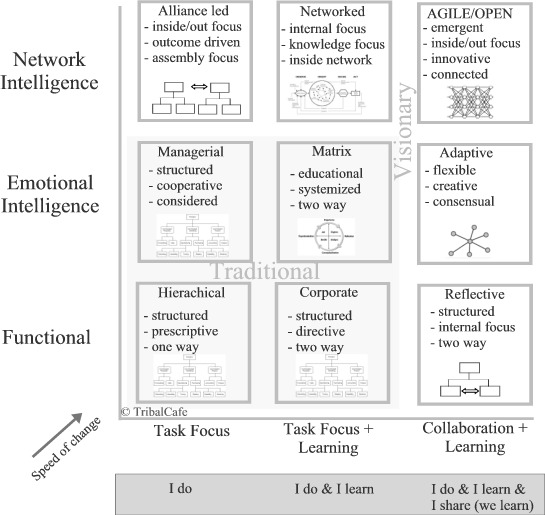
Change at any level is not easy; however understanding your own network of people can help facilitate change. If you know your key internal influencers and can enrol their support during change, involve them, garner feedback from them; then you are recognising the network intelligence of your own organisation. Moreover you are more likely to harness your network and succeed in your change programme. If you then take this further and embrace the fundamental collaboration that social technologies enable you are lighting the toch paper of creativity.

Context and Relevance

Your People are your brand.  Employees need to feel part of the brand and understand its purpose (pdf) - the Why, and their context within this. This is the relevance of sustainability and differentiation and enlists them to a cause. With new systems that give employees the ability to vote on managers e.g. Cubeduel and Honestly.com. So understanding people and developing open communication channels leads to trust between customers & people in organisations who are the heart of the brand. Social Media then helps validate brand values.

Each person is a network (the neural network which exists in their brain), part of a human network (swarm theory), which is itself part of networked ecosystem of our world. These patterns of connectivity resemble the web, but they are also models of behaviour reflecting the need to be adaptive and agile; a philiosophy needed at both an organisational and individual level. A network that collects information about its environment and adapts survives.


Innovation


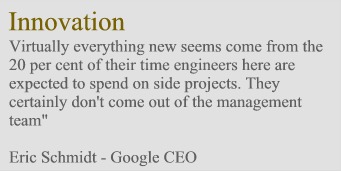
The transition to a more social business provides opportunities for creativity, collaboration and exploration; a way to redefine the organization and its relevance to its customers.


Harnessing the energies of people internally can facilitate a change in the brand from being isolated from its customers to being involved.

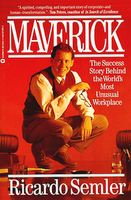
How? Think of businesses that like BestBuy, Zappos and even the maverick business of Semco led by Ricardo Semler. Semler transformed a fairly old stodgy business with over 3,000 employees into a place where everyone knows what everyone else earns, cleaners can book a spot in the next board meeting, and there are no secretaries.


Engagement


Why? because as organizations listen, they learn and by learning they can change what they do at the same time developing relationships with customers.

Social technologies and tools now provide research capabilities on a scale and to a level not known before. Data can be gathered that has behavioural context, influence and relational context as well as well as  demographic and personal details.

Organisations using this rich seam of data can decide upon customer engagement strategies that deliver experiences and so we move brands into an experience economy where customers freely engage with the brand based on the value it delivers. But this engine of marketing is flawed if not reinforced by employees who are engaged as well.

Change is about people as well as technology

Many organizations are focusing on the need for integration of new technologies.  Embracing change means guiding the business through a process of dismantling the legacy systems; adopting new and transitioning skills and processes.

Strategic decisions on how to align value from new business models, transition from existing, develop a strategic path, choose the appropriate technology and vendors, underpin resources to use and seed change through pilot projects and  scalable technologies....success factors and costs associated are often on the speed of change and how effectively the technologies are used.

So what does this mean for an organization


As organizations devolve decision making and become more transparent and open; engaging employees and harnessing their capacity for innovation are vital. People are not only critical resources within an organization, they are the organization.

Marketing 3.0 explains the growing imperative for companies to understand that they have a social role to play. Moreover, those companies that recognise there social purpose and deliver recognisable value will benefit by being competitively favoured.

Kotler highlights the increasing pace of change that Social Media is driving. Change is accelerating: technology is converging creating new business models whilst media is creating evermore fragmented markets. The dynamic for most companies has and will in the future be about identifying value and attracting customers through experiences.

In history we had a period of huge change called the renaissance which spanned the 14th - 17th Century. It was a time of political, cultural and artistic upheaval. I am not suggesting we are going through the same; there are many differences. However, there is a momentum of change, a spirit encompassing the idea to work together, to learn together, to make changes together that resonates with the idea of a new renaissance.

At TribalCafe we are looking at ways we can help others move forward, make viable changes within their business to seed and propagate innovation. We do this through people and technology. We help organisations integrate the people into the technology - provide training, help develop their understanding as we implement projects.

How do you think organisations will change - to a social business or an enterprise 2.0 model (the difference is the people approach)?