Showing posts with label mobile marketing. Show all posts

Monday, 27 June 2011

QR Codes | The What, Why and How of Using Them

What are QR Codes


Quick Response (QR) codes have been gaining ground recently (take a look at this Google Trends Chart ) and are now becoming a commonly used part of the digital marketing landscape; being used in magazines, TV Ads, posters, websites... But what are they and why the interest in them?

QR codes are an encoded barcode image resembling a square-like maze. A 1-dimensional UPC code, is most often used on packaging and used by retailers to track stock and price products at the point of sale. A 2-dimensional barcode stores data in both directions and can be scanned vertically or horizontally to be decoded.

QR Code, QR Code Marketing

A normal 1D barcode can store up to 30 numbers, but a 2D barcode (QR) can store up to 7,089 numbers. The additional storage capacity enables a variety of data beyond numbers to be stored and that is where it gets interesting.

Types of Information that can be delivered using a QR Code


QR Code data

Some great infographics that give you more detail and understanding about QR Codes:

How the process works


How to Generate a QR Code


  • QR Stuff - Data types include Google Maps location, PayPal Buy Now link, social media links, iTunes link, YouTube link, and more. Customize color. Send by email, or batch print to labels.

  • QR Code and 2D Code Generator - can generate QR Code, Micro QR Code, Data Matrix and Aztec Code. Additional features include URL shortening and customizing the color and format of your codes.

  • QuickQR - can produce QR codes that can easily be distributed


QR Code Generator that also provide analytics/tracking


QR codes commonly link to urls, so by using link shortening services bit.ly and goo.gl you can automatically generate a QR code for sharing your shortened links.  By using goo.gl as an example, you simply click on the “more” link after you create your shortened link, where you are taken to a page that not only gives you the QR code, but useful analytics. Here are some more QR tracking sites:


QR Readers


  • QR Reader for iPhone. QR Reader for iPhone scans quickly, with a range of usability and sharing options. Text and URLs open within the app.

  • QR Droid. Scan in both landscape and portrait modes, or even scan mirrored images. Decode saved images or URL addresses of a QR code. Generate a QR code to share contacts, bookmarks, apps, geolocations, and more.

  • QR App. Designed to be fast and simple. Display history of scanned QR codes. Add contacts directly to your address book.


More apps here for Android phones and iPhones.

Other types of 2d codes - QR codeDataMatrixScanLife EZcode, and Microsoft Tag (Tag).

2D Barcode Popular Formats: QR Code, DataMatrix, ScanLife EZcode, and Microsoft Tag

There are several key differences in these code formats. ScanLife EZcode and Microsoft Tag are proprietary formats only decodable by their tools, while QR and DataMatrix formats are open standard. (Additional format differences can be addressed in another blog post.)

Why Use QR Codes

We have mentioned before (mobile website with some stats blog) that with the advancing number of smartphones how brands engage customers increasingly needs to focus on mobile marketing. QR codes are way to bridge the online and offline world enabling brands to create innovative ways for people to connect at a local level as well as easily be distributed.

Some compelling facts about the mobile market:

Some reasons why you should use QR codes:

  • Easily distributed and shared

  • Can be scaled or combined with designs to create interesting 2d images (posters, on buildings...)

  • They can easily be tracked so great opportunities to measure your results from a marketing campaign:

    • timing - you can track when people used the code

    • location as well giving you detailed data on where people used the code


How you can Use QR Codes

There is a huge variety of ways to use QR codes and so I have split this into two sections: the first is a few ideas for how you can build QR codes into your marketing and the second is a look at some of the more interesting and inventive ways people have used them to date.

Some ideas


  • Signage - What value can you add to a sign? Linking online and offline and making that sign more interesting. Think about how QR codes can deliver value at the spot.

  • In store - Improving the In-Store Experience - Think about what you could do if you had the ability to link people to a video/promotion or other relevant marketing at point of sale. As mentioned in our previous blog about value it is about making it relevant.

  • Print -this can cover  anything from leaflets (e.g. trade shows), posters, brochures...

  • Business Cards - use a QR code on your business card to direct people to a landing page about your business or to a specific page on your Facebook page

  • Scavenger hunts - use them inventively to create treasure or scavenger hunts

  • T-Shirts - this can be very effective at events or for promotional/experiential activities

  • Email subscription - Use your QR code to send people to your email signup. Just make sure you give people a compelling reason to subscribe to your list...otherwise you will have just wasted their time. Not the best way to engage your audience.

  • Contact center/inbound calls - QR codes can also make a phone call. This could be used for a specific campaign or simply use it for a sales leads e.g. when printed with a promotional offer in a magazine. Likewise, QR codes can generate SMS text messages.


  • Likify brings Facebook sharing into the real world. The service generates QR codes that enable customers to "like" real products on Facebook. How does it work? When you find something you want to share, simply open up your QR scanning app, scan the code, and voila, you officially "like" the product on your Facebook wall.


Diesel took this concept in store

Some interesting ways in which QR codes are being used


If you spot any interesting ways that QR codes are being used then let us know and add to this blog


Monday, 20 June 2011

Mobile - Be Where Your Customers Are

The Growth of Mobile


As businesses wake up to the growing momentum behind the mobile revolution it is worth reviewing the scale of change and growth forecasted in this market. Although in its infancy the mobile undoubtedly will present some of the greatest opportunities for marketing.

Why? - because it links together the time and place of marketing; it is the on demand / real time delivery of information and the blending of online and offline that creates amazing ways to engage customers.


The smartphone is driving a new set of behaviours as people rather than switching on their mobile are consuming more and more media through their phones. Of course accessing social networks (Twitter, Facebook) drives a lot of the viewing but it is also the use of apps as well as the imediacy of being able to access the internet - Google for instance that makes it so useful. Interesting but not surprising is the use of mobiles during other media consumption and activities such as watching TV.


Where the Eyes Are?

Just as there has been a shift in how we consume media,  comes a subsequent shift in the move to increase mobile marketing spend. Borrell Associates forecast that by 2015, the mobile share will have grown to almost two of every three online marketing dollars spent will go to a mobile campaign. Other information - 53% of mobile users would share their location to receive more relevant ads (source: Mashable) and mobile coupon redemption is 10x that of traditional coupons (source: Borrell Associates).


This year more brands will experiment and explore how to use mobile to push the boundaries of user experiences.

Be Where Your Customers Are


When you search for a restaurant or takeaway on your smartphone using Google it will take into account your location (if you opt out of the location-based features). This local element is a vital ingredient in the search results. However, if a user then clicks through to a website that is not easy to navigate and find the information they are looking for e.g. your contact number, then users will simply click away.

Shopping habits are changing. Next time you are in a shop have a look around and see how many people are using there phones whilst in the store to look up products/reviews... There are now even apps that allow you to scan products whilst in the store and they will compare prices with other stores (often locally) there and then.


The opportunities s to engage your customers on the mobile are expanding. QR codes for instance provide a rich and local context to blending the offline with the online world. A QR code can simply be used to connect to a website, Facebook page, mobile site...the opportunities are both incredible. See our feature on Scoopit for more examples and information.


This and more trends are explored in this presentation by Space150.


Key Takeouts


If the forecast is even remotely accurate to how real life plays out, harnessing mobile marketing will help you be where your customers are. It is important to have your digital touchpoints aligned so that whether a customer looks for you on their mobile, laptop, social networks....you branding and communications are easy to understand and relevant to your target audience.

With mobile you are putting your brand into the palm of your target audience’s hand. Mobile is overtaking the PC for how and when we access information, communicate, connect and share. Facilitate experiences for your customers and you will business will benefit:


  • Whether you are a sole trader, SMB or large organisation you need to have a mobile website


  • Research how your customers use mobile to connect

  • Build your database of customers mobile numbers with an opt in campaign

  • Provide relevant and timely information to them

  • Use mobile advertising to reach your target customers


For larger organisations developing an app for your customers could well provide you with a unique way to provide value to your customers and develop a competitive advantage. In our next blog on mobile we will talk about developing a mobile strategy for your business and what you need to consider.

Sunday, 20 March 2011

5 Reasons Why Retailers Should Be Digital - Social Business

What is the dilemma retailers are facing?
The High Street has changed in the last five years driven by the rise of internet shopping coupled with the recession. But the continuing battle for retailers is how to adapt to changing consumer shopping habits and the technology that is enabling new ways to shop. High streets are at a cross roads that could determine their future; do they adapt or die. Here are some key facts that illustrate the balance:

We quickly get a picture that people are spending more time online because it is convenient. However the social aspect of retail shopping will still be important and whereas we used to research online before we shop we now do this whilst out shopping; this makes the need to be digital even more urgent. The key point here is that busier lifestyles mean consumers want to shop when, where and how they choose. But what does this mean for a retailer?

The essential need in todays fast moving commercial world is to be where your customers are, when they want to buy. To maximise commercial opportunities retailers need to be present across multiple digital channels. The three main digital channels currently are Website, Facebook and Mobile (almost one in three European Union mobile subscribers now owns a smartphone).

Why? - well it extends the reach of the retail brand and how a retailer sells their services and products; this enables them to wrap their business around the consumer rather than trying to get the consumer to fit to an old bricks and mortar model. Yet many retailers are not harnessing these channels and as a consequence floundering or failing.

"...but the majority of retail marketers are trying to catch-up with the shopper and figure out how all these channels work together,” said Richard Winter, POPAI President during a recent presentation at EuroShop 2011.

A good indicator of this shift is advertising spend. Traditionally marketing budgets have always followed where people spend their time; it is an indicator of where marketers are going to spend their money in the future; clearly the future trend is heavily weighted towards digital channels.

Who is doing this well?

Brands with consumer products are particularly suited to selling on Facebook.

Here are a few examples:

Heels.com (click to see store)


Asos (click to see)


Asos claims it is the first in Europe to open such a store, which will allow fans to buy its clothes without leaving the Facebook site. ASOS mobile sales exceeded £1m in December 2010.

French Connection (YouTique) (click to go to YouTube)


Marks and Spencer


Why is Social Business Important to Retail?

The examples above show some of the leading brands but if we look at the future it is only the start of things to come. Technology is 'rocketing' forward and subsequently creating a digital divide between those that get it and those that are still figuring out what it is.


The value of goods sold through social media is currently $5bn, but is set to grow to $30 in the next 5 years. . We use Social Business as way of expressing how technologies that enable social collaboration; comments, feedback, input, ratings....and commerce are used by brands for developing their business.

Most large companies are now wrestling not with the need to be digital, but more on how to plan and execute. The complaints we hear from the boardroom are about (people) resources, about target pressures, about the lack of time, about internal legacy ways of working and the need to change quickly - to make things happen.

Why Retail Needs to be A Social Business

With digital becoming ubiquitous, and the pace of change in mobile showing no sign of slowing, the need to change and adopt digital channels is obvious. Here are some compelling reasons we think a retailer should adopt mobile and use social channels to reach customers.

1. Social becomes a shopping experience

As this infographic neatly explains 1 in 11 humans on Facebook, thus making it an obvious place to move from just brand engagement to selling - f-commerce. Brands are moving away from corporate websites to engage with customers where they are e.g. Kraft and in ways that add relevance, value and deliver a customer experience. Retailers need to build a community of people around their brand and use the interactions and feedback to sharpen their understanding of their customers.

2. Video is ubiquitous and interactive

YouTube's growth and success has been undeniable; as of Feb. 2011, YouTube has 490 million unique users worldwide that searched about 92 billion pages per month. It means that we spend around 2.9 billion hours (over 325,000 years) on YouTube in a month.

Now Add video to a Facebook commerce site and you have a powerful combination of how you can deliver video content within Facebook and at the time it is relevant to a product. Zappos experienced an increase from 6% to 30% in sales for products with video on it website. As French Connections site demonstrates it is an obvious combination. Retailers need to harness video into their offering and use video channels to distribute content.

3. Mobile, Location, Local


In our last blog we talked about the growing need to have a mobile website as increasing smartphones will enable new ways for brands to interact with consumers. Mobile will become our day to day tool taking over from the PC and some predict that mobile shopping could be as big as online shopping.

In addition to this you also have the growing use of Location Based Services e.g. Shopkick , FourSquareGowalla or Facebook places for checkins which can be used to incentivise a customer to buy. Notifications will automatically go to a user’s profile and news. In effect this is a great word of mouth and extends the reach of the business and brand.

4. QR Codes Blending Online and Offline

QR codes seem to be getting traction but this research shows people don’t really know what they are and what they need to do with them. QR codes are here to stay as an accepted form of marketing, cleverly integrating the offline with the online. Here are some innovative uses of QR Codes:

  • 72 percent of Smartphone users likely to recall an Ad with a QR Code

  • Shoppers who buy a bottle of M&S brand orange juice are directed to scan a QR code with their phone’s camera which directs them to a Food To Go mobile site

  • Ralph Lauren use QR codes in their windows allowing you to shop when the store is closed. You simply scan the QR code and instantly be taken to the relevant product on the website, which you can then purchase.

  • Miss Me jeans - cardboard tag was attached to a pair of jeans I recently purchased. The QR code takes you to a video showing a woman walking around in her Miss Me jeans in a sexy manner.


5. Community, Contact, Promotions

As brands develop a community on their Facebook page they have a direct and ongoing relationship with them. These fans are more likely to talk about a new product or promotional campaign to their own friends and followers, increasing both awareness and word-of-mouth.

In light of this, companies are presented with a great opportunity through social channels to reward those fans and followers that are sharing, liking, posting, and generally talking about their new products.

By aligning new product launches with Facebook competitions, brands can both increase fan acquisition and engagement, as well as present customers with special offers, exclusive discounts, additional content, and even free product trials e.g. Heinz.

Retail is everywhere

Retail is changing, how brands now engage with customers is still in its early stages with some brands clearly being more innovative than others. There is virtually no limitation now to how different technologies can be combined and used within Facebook, Mobile and on the Web. It is now an imagination business - retailers need to start imagining their futures.

So what do you think about shopping in these new ways?

Friday, 11 March 2011

5 Reasons Why You Should Have a Mobile Website

The Rise of the Smartphone

The smartphone is rapidly gaining ground in market share and with manufacturers bringing out an ever increasing array of models it is hailing in a new and exciting era of change in how we communicate. The scale of the smartphone adoption has also been aided by the rise of Android (see infographic).

Some figures that illustrate the growth:

We have reached a focal point with the smartphone for its use; from social networks to gaming to

The explosive success of the iphone and the app store has propelled people to argue over how people will in the future access content and services. It’s not what the phone does, it’s what the user does.


App vs. Mobile Website

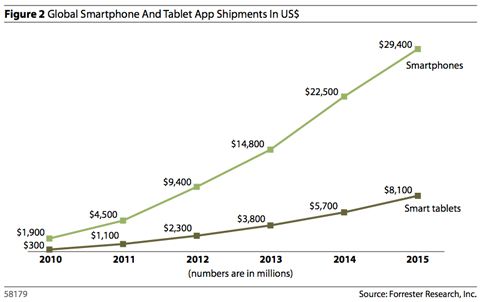
The argument over app and website will change. It is not about either/or it is about choosing the right tool based on the customer strategy. As Forrester point out; frequent users of services like banking and brokerage will want curated experiences in the form of apps; they will also play games. However, consumers will want ubiquitous access to content and services. This will force service providers to sync content via the cloud to maintain a consistent experience across platforms.

A recap on the app numbers:

For years marketeers have struggled with the where and when of marketing. Now though mobiles enable brands to be involved in a moment and deliver value at that time and place — when there is a heightened need. It changes the game and presents new opportunities.

The mobile experience

Mobiles offer brands the create unique experiences from the moment of exploration to purchase. It is extending not only where media is consumed but the how. The real time element added to location based capabilities enables more personalised and relevant services to be delivered to customers. Many of thes uses of these technologies are only just being explored.

However, mobile sites are fast becoming a necessity for businesses. Just like in the early 1990s when the internet was in its infancy the business who did not adopt the “website” trend soon started to struggle as their competitors began to dominate the digital market.

5 Reasons Why Businesses Should Have a Mobile Website

1. Mobile search - Despite all the media hype, and vast sums pumped into developing and promoting native apps, more consumers use their browser than apps in developed nations.

  • Mobile Websites are Organically ranked in Local Mobile Search Engines

  • Gartner (March 2010) predicts that in 2011, over 85 percent of handsets shipped globally will include some form of browser.

  • 33 percent of respondents have used their phone to access a retailer website

  • The power of local mobile search (infographic)

  • Google has seen a 500% growth in mobile search from 2008 to 2010 and a 67% increase in mobile queries in the last quarter alone.

  • It is estimated that less than 3% of businesses have a mobile website yet local searches on mobile web account for over 9 out of 10 searches.

  • Google has a separate index for mobile content. Ranking on mobile is easier because Google has a much smaller index of content under mobile, as this segment is still in its infancy. If businesses get a mobile site today, they stand a very good chance of being highly ranked.


2. Mobile Commerce - People are using their mobiles to buy products and services

  • 62% of smartphone users said they have purchased physical goods from their mobile devices in the last six months (Source: Adobe Survey, 2011)

  • By 2015, it is predicted that mobile shopping will account for $163 billion in sales worldwide, 12% of global ecommerce turnover (Source: ABI Research, 2010)


3. Consumer experience - how customers react and use a mobile website

4. The Right Information Easy to Access

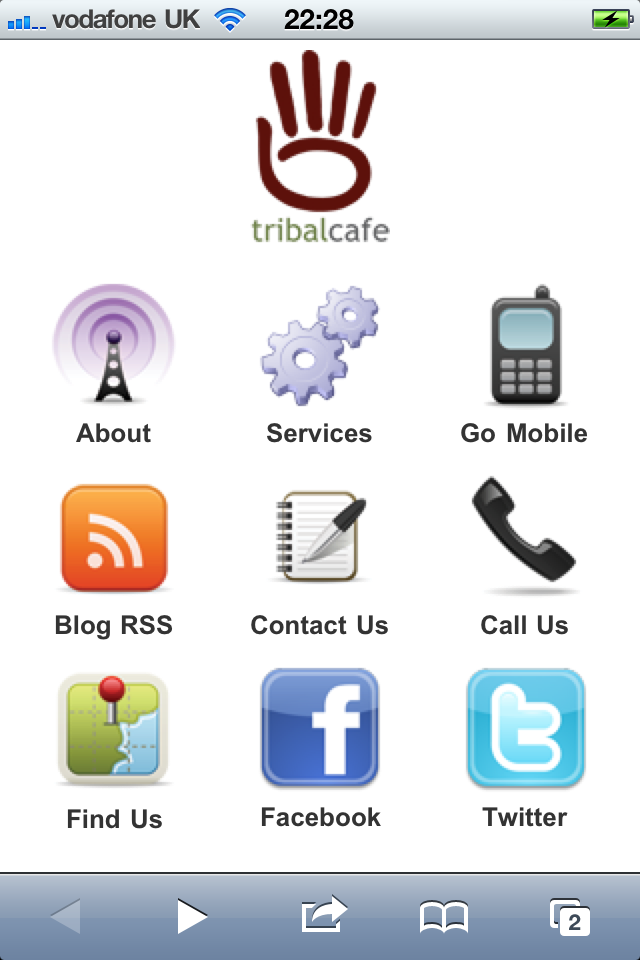
The size of a mobile screen limits the amount of information that can easily be seen. Scrolling up and down for information makes it incovenient and hard to navigate. Added to this many sites if developed in flash will simply not work on an iphone. Often customers when searching simply might want to call you, so finding your number easily could make the difference between a sales or a lost opportunity.

So what should it look like - see our mobile site this should give you an idea


5. Reach - Be where your customers are

A mobile site extends the reach of your business to the mobile Web, allowing you to provide your mobile visitors a fast and easy way to learn about your business and contact you with one click. While your existing web site is aimed at giving a full and comprehensive picture of your business, a mobile site allows you to deliver immediate access to what matters most when on the go; it extends the reach of your business. The two sites are complimentary and work together to make sure your customers are getting the most appropriate experience for their context and their device.

Now is an opportunity to be one of the first in your niche to have a mobile design of your site. You’ll attract more visitors and make more sales.

It is the future - what do you think?